SDR_AVE – Advanced Data Average Analyzer
SDR_AVE is a high-performance signal integration plugin for SDR#, fully ported to .NET 9 (32/64-bit). This version features a modernized GDI+ rendering engine and a robust mathematical core.
Mathematical Engine
$$ \bar{P}_{ik} = \frac{1}{M} \sum_{j=1}^{M} P_{jk} $$
$$ M_k = \frac{S_k}{N} $$
Fully compatible with the latest SDR# auto-detect mechanism. Designed for radio astronomy, weak-signal detection, and scientific data analysis.
The lates version of AVE_SDR for Windows
Documentation and user manual is also in the link above in docx file.
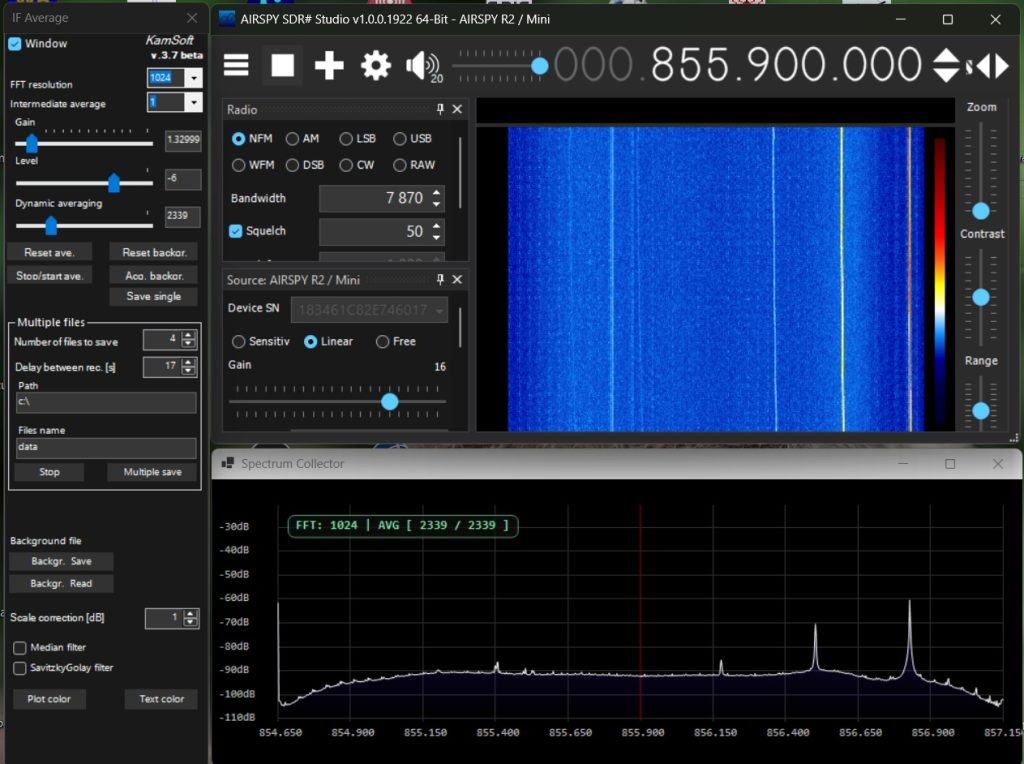
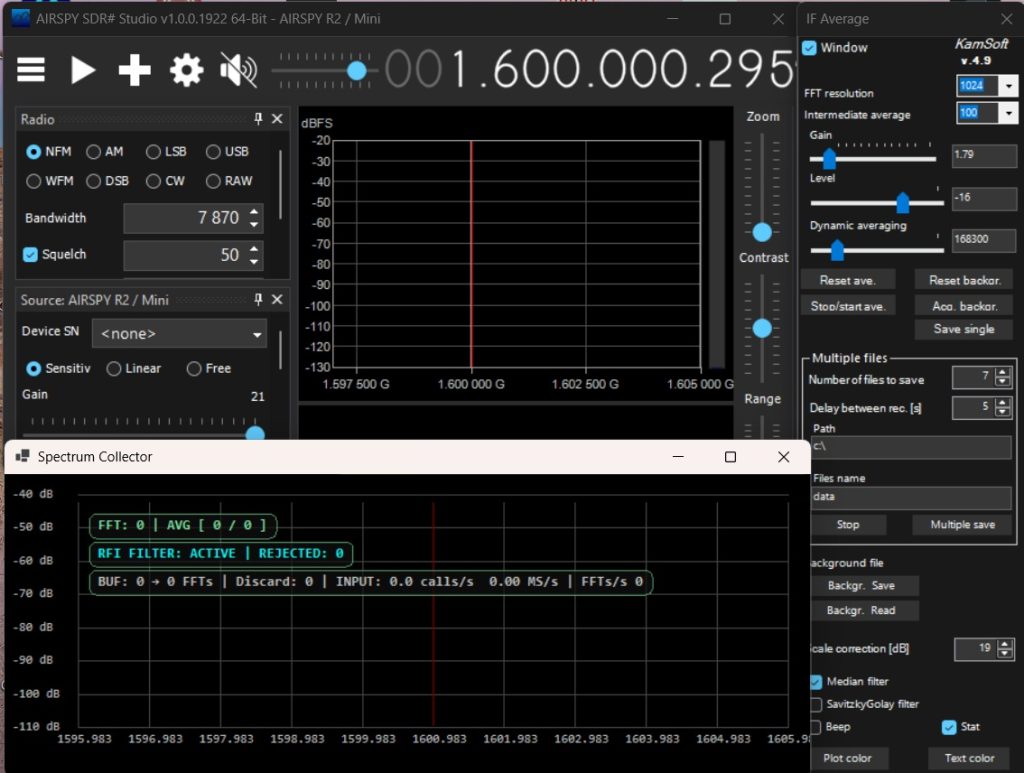
This is an old verion of AVE pugin for SDR# designed to average signals over time for specific frequencies. Collected data can be exported to a two-column file containing frequency and signal strength. Additionally, the plugin allows for background recording, which is essential for signal correction. It is a popular tool among amateur astronomers, particularly for observing the 1420 MHz hydrogen line. For a detailed user guide, please refer to the well-known RTL-SDR.com website.Plugin download: AVE
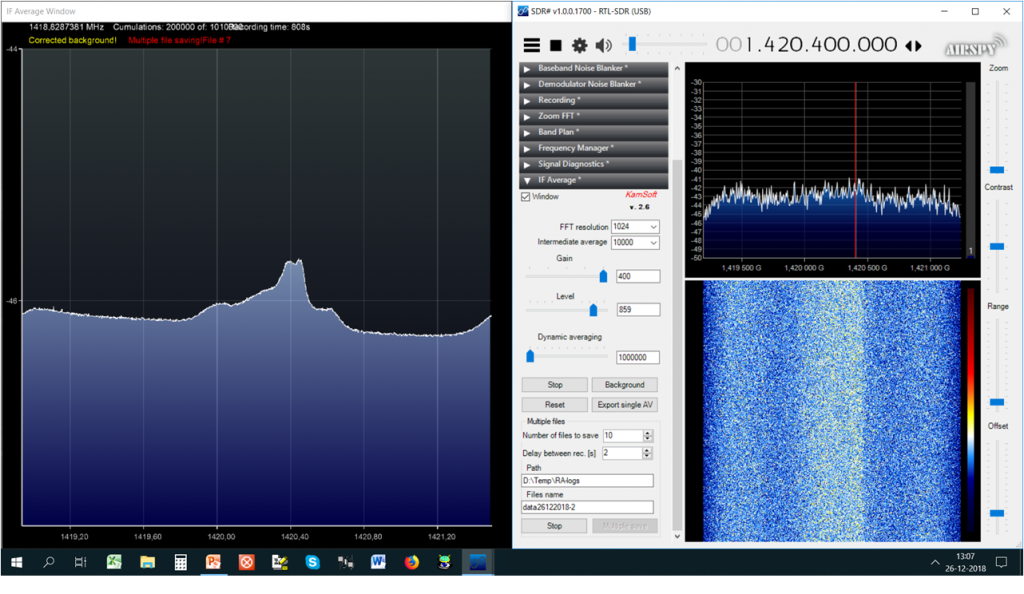
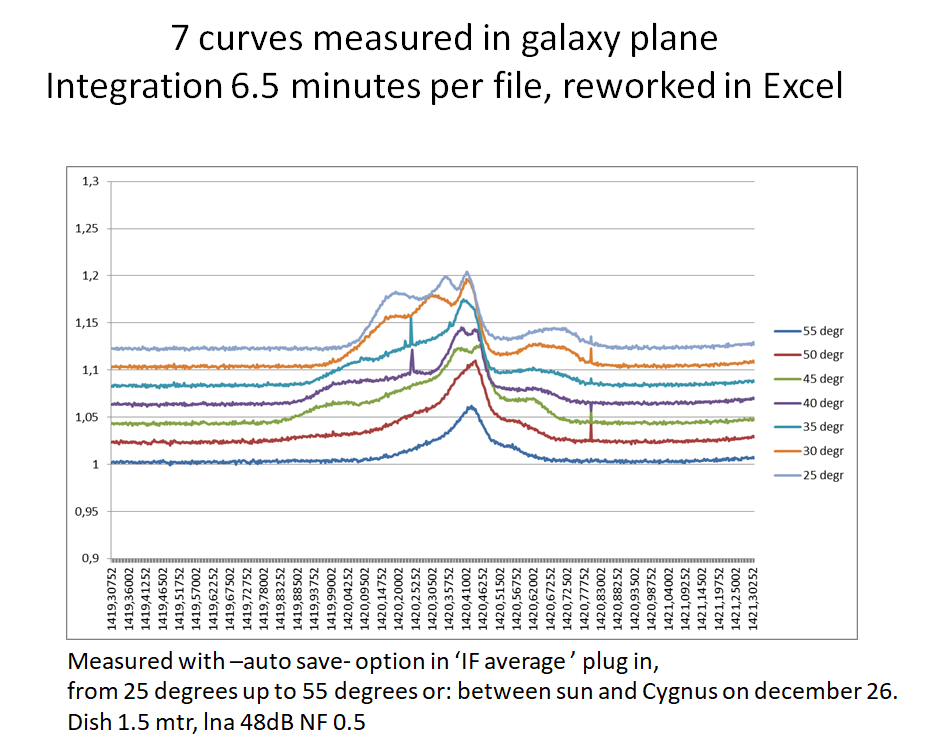
The data is presented with the consent of Frans De Jong (pe1rxj). An amateur astronomer who strongly motivated me to make this plugin.
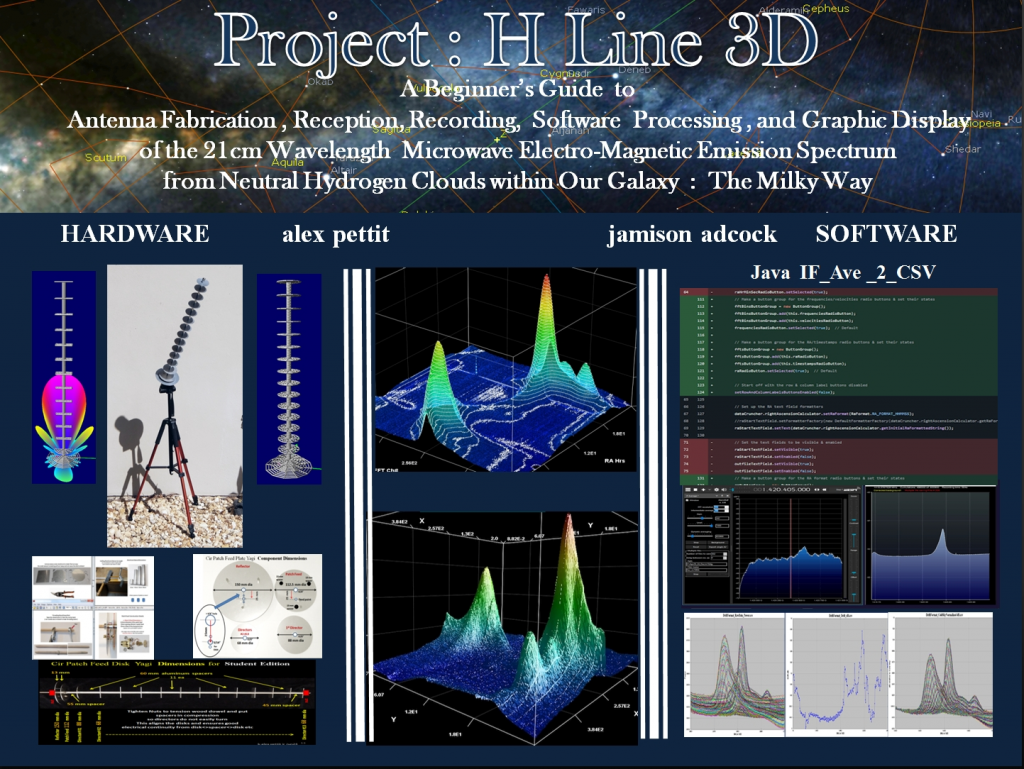
Another very interestinig project by Alex Pettit https://github.com/AP-HLine-3D/HLine3D
Discovering the Milky Way with Alex Pettit’s HLine3D
If you’ve ever wondered whether radio astronomy is reserved only for multi-million dollar observatories, Alex Pettit is here to prove you wrong. Alex is a brilliant radio astronomy enthusiast and engineer who has dedicated his time to making deep-space exploration accessible to everyday hobbyists, students, and makers.
His incredible open-source project, HLine3D, bridges the gap between affordable DIY hardware and advanced data processing. By designing a highly efficient 13-element Yagi antenna that anyone can build using basic materials from a local hardware store, Alex has turned the complex task of mapping our galaxy’s hydrogen line into an exciting, hands-on weekend project. It’s an absolute game-changer for the amateur radio community.